Article · Loans
Leasing in Armenia: What to Know Before Signing a Contract
Leasing is a financing solution that allows individuals and businesses to acquire property, equipment, vehicles or industrial machinery without paying the full purchase price upfront. It plays an important role in business development, expanding production capacity and implementing new investment projects.
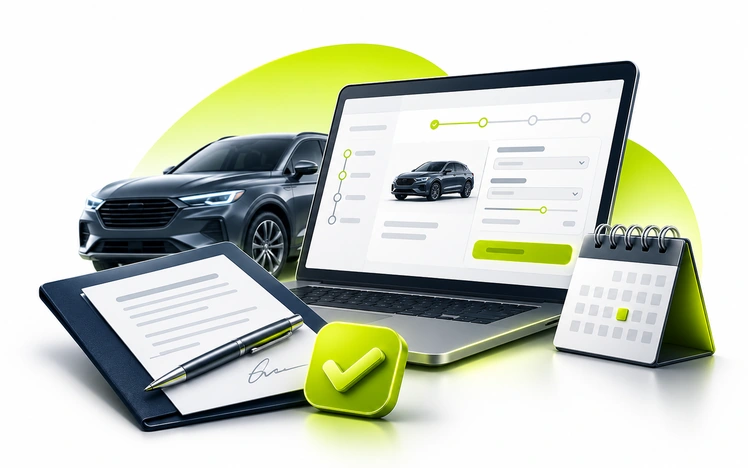
Leasing services In Armenia available to legal entities, individual entrepreneurs and individuals, depending on the financing programs offered by financial institutions.
You can submit an online leasing application and receive responses from leasing providers in your personal account on hamematir.com. Once you select a suitable offer, you will need to visit the leasing company and sign a leasing agreement.
What do you need to arrange a leasing agreement? Before signing, it is important to understand how leasing works, what financial obligations it involves, which documents are required and what legal aspects you should consider.
What Is Leasing and How Does It Work?
Leasing is a form of financial rental that allows a customer to acquire and use the property they need while paying for it through regular installments over a period specified in the agreement.
A leasing transaction generally involves three parties:
- The lessor: a bank or a specialized organization authorized to provide leasing services. It purchases the asset and makes it available to the lessee.
- The lessee: an individual or legal entity that uses the asset and makes the agreed payments.
- The seller or supplier: the company from which the leased asset is purchased.
The transaction usually follows these steps:
- The lessee selects the required asset and supplier.
- The lessor purchases the asset and transfers it to the lessee for temporary possession and use in exchange for the payments specified in the agreement.
Key Features of Leasing
Throughout the term of the agreement, the leased asset remains the property of the lessor. At the end of the agreement, ownership may be transferred to the lessee if this is предусмотрено by the contract and all relevant payment obligations have been fulfilled.
What Can You Acquire Through Leasing?
- Cars and other vehicles;
- Agricultural and construction machinery;
- Industrial and manufacturing equipment;
- Medical and laboratory equipment;
- Equipment required for retail businesses and service providers;
- Real estate in certain cases.
Advantages of Leasing
Leasing allows customers to start using the assets they need without paying their full purchase price upfront. This is particularly beneficial for businesses that want to preserve their working capital and allocate it to day-to-day operations and business development.
How to Apply for Leasing in Armenia and What Documents Are Required?
The leasing application process in Armenia starts with submitting an application to a financial institution. In many cases, you can also apply online.
Before applying, we recommend that you:
- Review offers from several financial institutions;
- Compare down payment requirements, interest rates, financing terms and additional fees.
The main steps involved in arranging a leasing agreement are:
- Selecting the asset and supplier. The customer chooses the asset they wish to acquire through leasing and provides information about its price and supplier.
- Submitting an application. The prospective lessee applies to a bank or leasing company and provides the required information and documents.
- Financial assessment. The organization evaluates the applicant's financial situation, income, existing financial obligations and repayment capacity. For business leasing applications, the company's industry, turnover and financial statements may also be assessed.
- Approval of financing terms. Based on the assessment, the organization determines the financing amount, down payment, interest rate, repayment period and any additional collateral requirements.
- Signing the agreement and purchasing the asset. Once the application is approved, the leasing agreement is signed, the lessor purchases the asset and transfers it to the lessee.
- Making payments. The lessee makes regular payments according to the schedule specified in the agreement.
Documents required to apply for leasing:
For individuals:
- An identification document;
- A Public Services Number or the relevant certificate;
- Documents confirming income;
- Bank account statements;
- Documents related to the asset being purchased.
For legal entities and individual entrepreneurs:
- Company registration documents and legal entity details;
- Identification document of the director or authorized representative;
- Financial statements;
- Tax records and bank statements;
- Information about business activities and income;
- An invoice or quotation for the asset being purchased;
- If required, guarantee or additional collateral documents.
The final list of required documents is determined by each financial institution according to its internal procedures and risk assessment criteria.
Main Leasing Terms and Interest Rates
Leasing terms may vary significantly depending on the type and value of the asset, the applicant's financial situation, the agreement term and the selected financial institution.
The main conditions include:
- Down payment. The required amount is determined by the financial institution. Some programs offer zero-down-payment leasing, although additional guarantees or other financial requirements may apply.
- Interest rate. The leasing interest rate may be fixed or variable, depending on the agreement.
- Financing term. The term depends on the type of asset and its intended use. It may range from several months to several years.
- Leasing payments. Payments are usually made monthly or at another frequency specified in the agreement. They include the relevant principal and interest components.
- Insurance and additional security. Insurance for the leased asset may be mandatory in certain cases. The financial institution may also require a guarantor or additional collateral.
- Currency. Leasing may be provided in Armenian drams or foreign currency, depending on the institution's financing program. If the financing is denominated in a foreign currency, exchange rate fluctuations should be taken into account.
Some leasing programs in Armenia may also include government support and interest rate subsidy mechanisms.
Therefore, when comparing leasing offers, it is important to look beyond the advertised interest rate. Consider the total amount payable over the entire contract term, the down payment, commissions, insurance costs and potential penalties.
Leasing Agreement: Important Terms and Armenian Legislation
A leasing agreement is the main legal document governing the transaction. It defines the rights and responsibilities of the lessor and lessee, financing terms, rules for using the asset and the grounds for terminating the agreement.
In Armenia, leasing relationships are regulated by the Civil Code of the Republic of Armenia. Articles 677–684 and related provisions address leasing. Following legislative amendments adopted on June 18, 2020, the relevant provisions were revised, and the term "leasing" replaced the previously used term "financial rental."
Under Armenian legislation, a leasing agreement must be concluded in writing. A leasing agreement involving real estate is subject to notarization, while the rights arising from it must be registered with the state.
Before signing the agreement, pay attention to the following provisions:
- Description of the leased asset. The agreement should clearly specify the type of property, make, model, technical characteristics, price and identification details.
- Total leasing cost and payment schedule. Review the down payment, monthly installments, interest rate, commissions and the total amount payable throughout the agreement.
- Ownership rights. Clarify when and under what conditions ownership of the asset will be transferred to the lessee.
- Insurance and maintenance. Determine who is responsible for insuring the asset, technical maintenance, repairs and operating expenses.
- Late payments and penalties. The agreement should specify the consequences of delayed payments, how penalties are calculated and what additional expenses may apply.
- Early repayment and contract termination. Find out whether early settlement is permitted, what additional charges may apply and under which conditions the agreement can be terminated.
- Asset return conditions. The agreement should clearly define the circumstances under which the asset must be returned to the lessor due to a breach or termination of the contract.
Under the Civil Code of the Republic of Armenia, in certain circumstances, the lessee has the right to make claims directly against the seller regarding the quality or completeness of the asset or delays in its delivery.
At the same time, the lessee is responsible for maintaining the asset, using it for the purposes specified in the agreement and making payments on time.
What Should You Check Before Signing a Leasing Agreement?
Before signing the contract, we recommend that you:
- Compare offers from at least several financial institutions;
- Calculate the total cost of leasing;
- Review the annual effective interest rate;
- Clarify all commissions and additional expenses;
- Check the early repayment conditions;
- Review insurance and maintenance requirements;
- Carefully read the clauses concerning contract termination and penalties.
Tips for Those Planning to Apply for Leasing
- Pay particular attention to the required down payment, CASCO insurance requirements and the conditions for transferring the asset.
- Submit an online leasing application through Hamematir.com for a car, equipment, machinery or real estate. Check which leasing providers will receive your application, confirm its submission and track their responses in your personal account.
Similar articles

Article
Insurance for Banking Products in Armenia: Loans, Mortgages and Bank Deposits
Taking out a loan, purchasing a home with a mortgage or placing money in a bank deposit are usually decisions people make when they feel financially secure. However, unexpected events such as illness, loss of earning capacity, property damage or other difficulties can create serious financial challenges. Insurance and government-backed protection mechanisms help reduce potential financial losses in such situations.
Details
Article
How to Get a Fast Online Loan in Armenia
If you need money urgently and want to get a fast loan using just your passport, applying for an online loan through a simplified process can be a convenient solution. Banks and financial institutions in Armenia offer loans with simplified documentation requirements, and the entire application process can be completed online in just a few steps.
Details
Article
Repossessed Leased Vehicles and Equipment in Armenia: How to Buy at a Better Price
Purchasing a vehicle or specialized machinery requires a significant financial investment, especially when it comes to commercial transport or equipment for business purposes. One way to reduce these costs is to consider assets returned to leasing companies because previous customers failed to meet their contractual obligations. These vehicles, commercial transport units and machinery may be offered for resale, giving buyers an opportunity to acquire equipment at more attractive prices.
Details